
[Twitter, 7/15/19] Medieval Buddhist of the Day: Xie Baoming 解保明, chief patron of a Buddhist charitable society that dedicated a stele with an image of the Buddha Maitreya in 533, during the Northern Wei. The piece is in the Metropolitan Museum of Art in NYC. Here’s Xie Baoming on the bottom front of the stele, second from the viewer’s right, accompanied by two servants, and holding an incense burner of the magic-mountain type 博山爐. The inscription reads in part: 佛弟子解保明、勸化上下邑子五十人等,敬造石像一區,吿四尺。
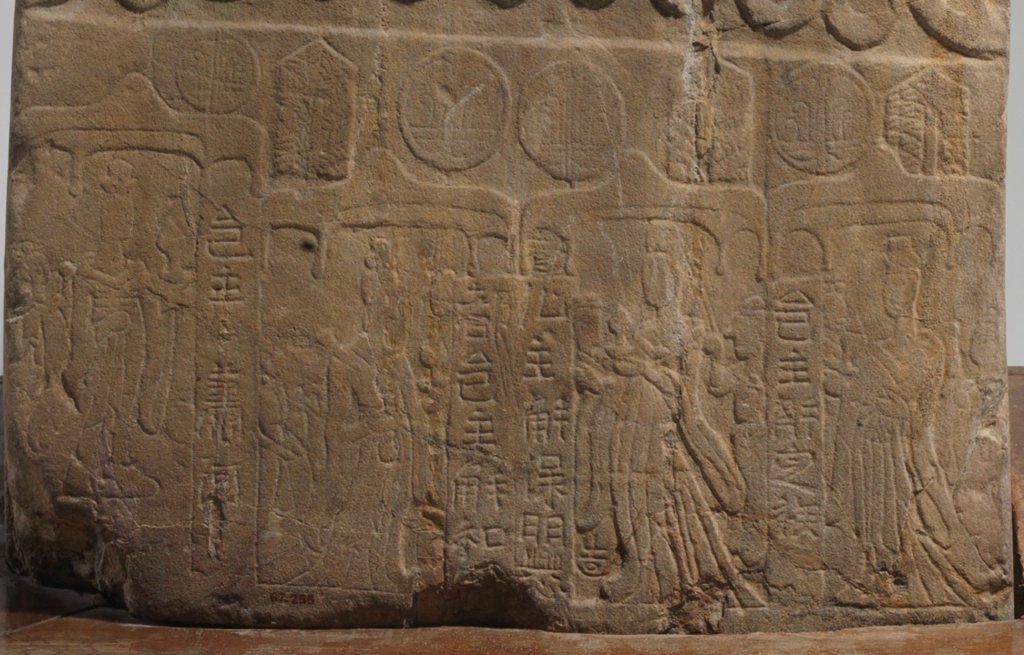
That’s the part that first caught my eye. “The Buddhist disciple Xie Baoming, with those, high and low, whom he exhorted toward virtue, being fifty members of the yi-society, reverently commissioned a stone figure of the Buddha, four chi 尺 in height.” (吿 = 高 here).
Since this inscription appears on the Buddha figure in question, I have to wonder why the donors felt the need to specify its height. The value of the chi 尺 varies over time from about 10 to 13 inches, but the piece is 45 inches high, which seems about right. Why did the height need to be specified in writing? Four chi isn’t, so far as I know, a traditional or symbolic measurement for images (by contrast to the “18-foot” standing figures of the Northern Wei 丈八像) – was there some kind of one-upsmanship going on here?
Looking more closely at this piece, I am also charmed by Xie Baoming’s figure on the front, which is inscribed 勸化主解保明興心造, which gives us a picture of Xie’s particular enthusiasm for the project. “The exhorter-in-chief, Xie Baoming, set his heart on making (this).” The phrase 興心, which I’ve translated as “set his heart on,” often indicates a specific, dedicated intention, but I can’t get over the use of 興, which to me suggests energy and enthusiasm. It’s not hard to see Xie as the guy who set this whole project in motion, and saw it through.
 Medieval Buddhist of the Day
Leave a comment