
[Twitter, 5/28/19] Meet Hedoulin(g) Sidiba 紇豆陵俟地拔, whose name appears twice (in two slightly different transliterations) on the stele of Zhai Xingzu, found in Yanshi, Henan, and dating to 523 CE, in the late Northern Wei. Here he is on the back of the stele:
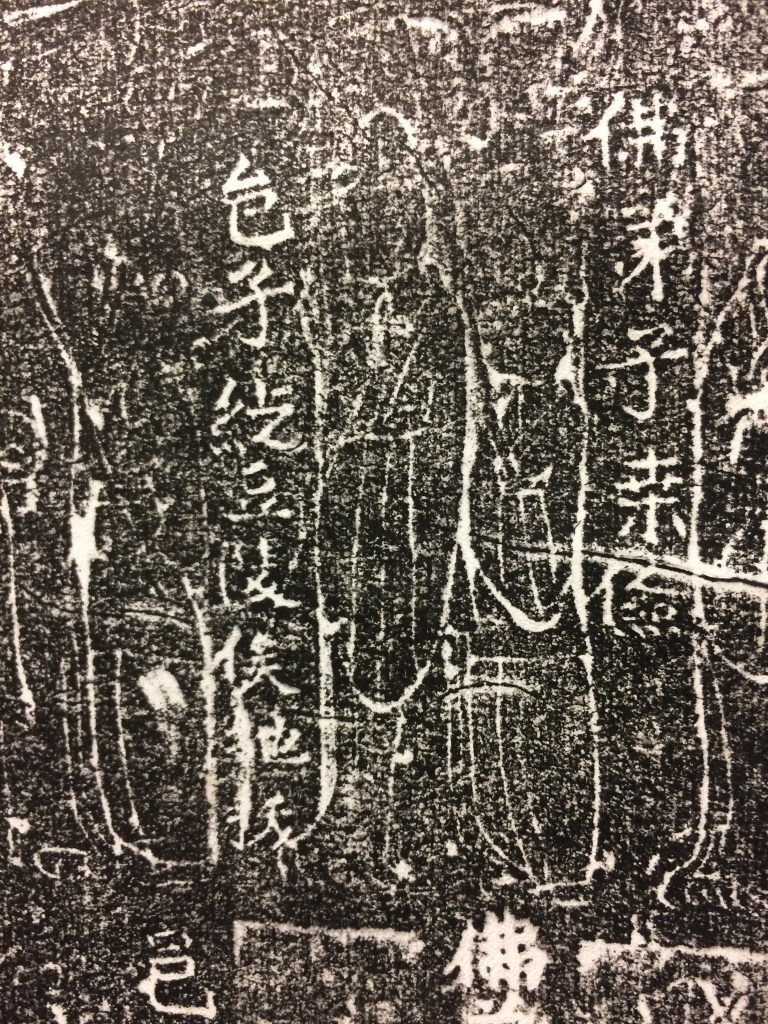
He was a major donor to the stele and his name also appears prominently on the front, with the title 天宮主, which indicates he gave extra money for a special project as part of the activities of the group of patrons who sponsored the stele. Here it’s written 紇豆鄰俟地拔.
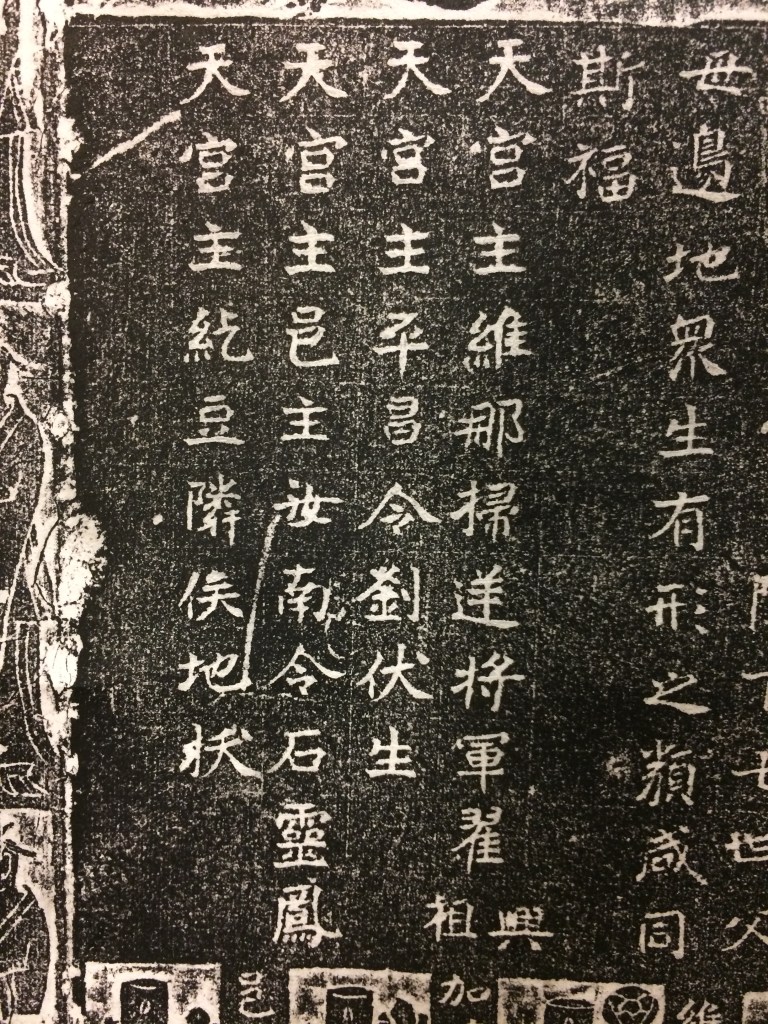
天宮主 literally means “master of the heavenly palace” but here “master” indicates “patron” and the question is, what is meant by the “heavenly palace?” Other such titles indicate a sponsor paid for a particular image or ritual offering, as 大像主 “patron of the main image.” I haven’t worked out the specifics, but this seems to suggest he paid for a structure or shrine, which may be external to the stele (and hence lost). It’s not uncommon for these inscriptions to record patronage activities beyond the monument where the inscription appears. Sutras copied, vegetarian feasts given, etc. Anyway.
My main question is, what kind of a name is Hedouling Sidiba? If its multisyllabic nature didn’t tip us off that it’s not a Chinese name, the variation in transliteration (陵 vs. 鄰) would. Is there any clue to its origin?
I’ve turned up one record, from 532 CE: the Xianbei general Yuwen Tai 宇文泰 suggested this strategy for defeating his rival Gao Huan 高欢: “河西流民紇豆陵伊利等,戶口富實,未奉朝風。今若移軍近隴,扼其要害,示之以威,服之以德,卽可收其士馬,以實吾軍。” (周书卷 1:文帝上)Roughly: in the chaotic years as the Northern Wei fell, one Hedouling Yili and his people were refugees from what is now Gansu province, many in number but not (yet) loyal to the crown. Yuwen Tai suggested sending the army to their aid in modern Shaanxi, thereby planning to “instruct them with might and subdue them with virtue” 示之以威,服之以德, enabling their troops and horsemen to be added to the army, to “fill out our numbers.” Hearts and minds, people.
Later records suggest the first Tang emperor’s mother Lady Dou had ancestors who fled north in the Eastern Han (25-220 CE) and joined the Xiongnu confederacy. When their descendants moved south again in the Northern Wei (386-534), the court granted them the name Hedouling. They were said to have reverted to Dou by the beginning of the Tang (609-907 CE). That’s a narrative that claims the Hedouling were originally Chinese (for certain values of Chinese). But even if it were true (the Tang records are 500+ years after the events they describe), what would it mean to a sense of family/ethnic identity to have spent 150+ years on the steppes? Nomadic confederacies were notably fluid and multiethnic, and claims to identity might as easily be based on allegiance as on anything we’d recognize as ethnicity. And if the Hedouling were refugees in Shaanxi in 532, what was Hedouling Sidiba doing in central Henan (Yanshi is near Luoyang) nine years earlier? We’ll probably never know. But we can remember him nonetheless, and I think that’s also worth doing.
[Wen-yi Huang replied very helpfully to the original Tweet: “As far as I know, Hedouling Yili and his people were not actually refugees when they were in Hexi area. Instead, they were very powerful for Hexi as one of the Northern Wei’s state pastures. As to Hedouling Sidiba, Hedouling was his clan name and Sidiba was originally an official name. In his book Zhonggu beizu minghao, Luo Xin has a chapter on many variations of Sidiba (Elteber).”]
 Medieval Buddhist of the Day
Leave a comment