
[Bluesky, 12/2/24] Medieval Buddhist of the Day: Bhiksu Fasheng 比丘法生, who sponsored an image in the Guyang cave in honor of Emperor Xiaowen, of the Prince of Beihai (then a powerful court official), and the prince’s mother, Lady Gao (a previous MBOTD). Who was he and what did he think he was doing with this gift? Here’s the niche:
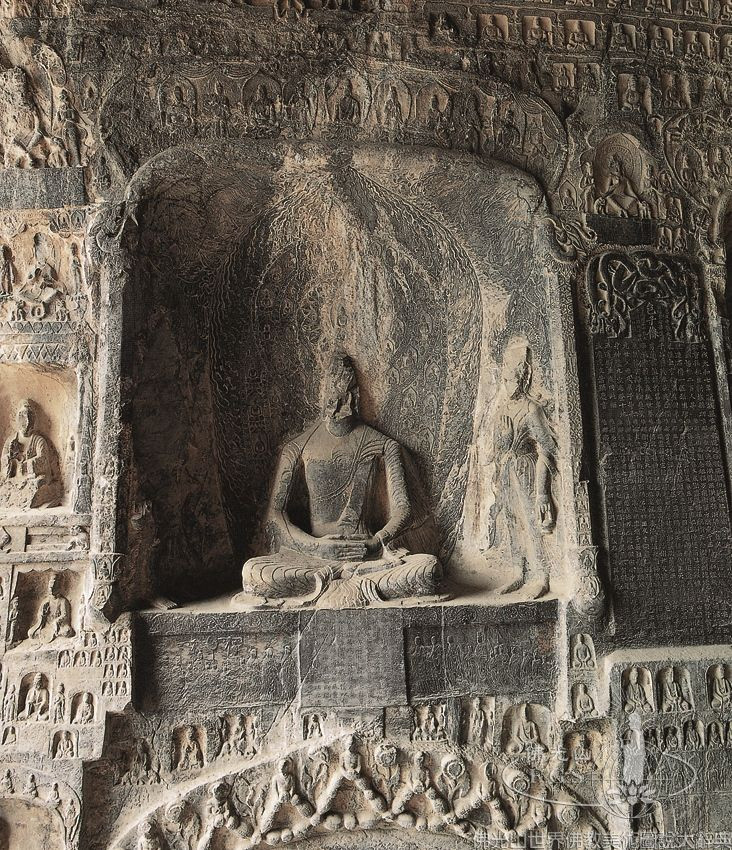
Fasheng must have been a member of the Prince of Beihai’s inner circle; otherwise it’s hard to explain why he chose the prince and his mother as beneficiaries. Monks do give in honor of family members, but there’s no reason to think that Fasheng was a member of the imperial family. The emperor (the prince’s older brother) seems to be included as an afterthought; if he were the main target of Fasheng’s blessings, then it would be odd to include the prince and his mother, rather than the prince and, say, the other two top officials at the court (the so-called Three Lords 三公).
It seems more likely that Fasheng wanted to butter up the prince and his formidable mother, but couldn’t leave the emperor out. In 503 the prince was at the height of his powers, and a savvy monk who was close to the court might well choose to honor him and his mother in this way. But the prince’s star was about to fall: soon he would indulge himself by canoodling with Mme Gao, the wife of another prince but more importantly, the cousin of the powerful Gao Zhao 高肇, who ultimately denounced the prince in 504, leading to his fall. So what happened to Fasheng then? [I have wondered elsewhere whether Gao Zhao may actually have learned of the prince’s corruption through this affair. It would make the prince’s mother’s invective more understandable, and explain the beating she gave her 27-year-old son on account of the matter.]
Epigraphy to the rescue! In 1953, a damaged partial stele was discovered in Maijishan cave 126, which names Bhiksu Fasheng as donor. Here it is:
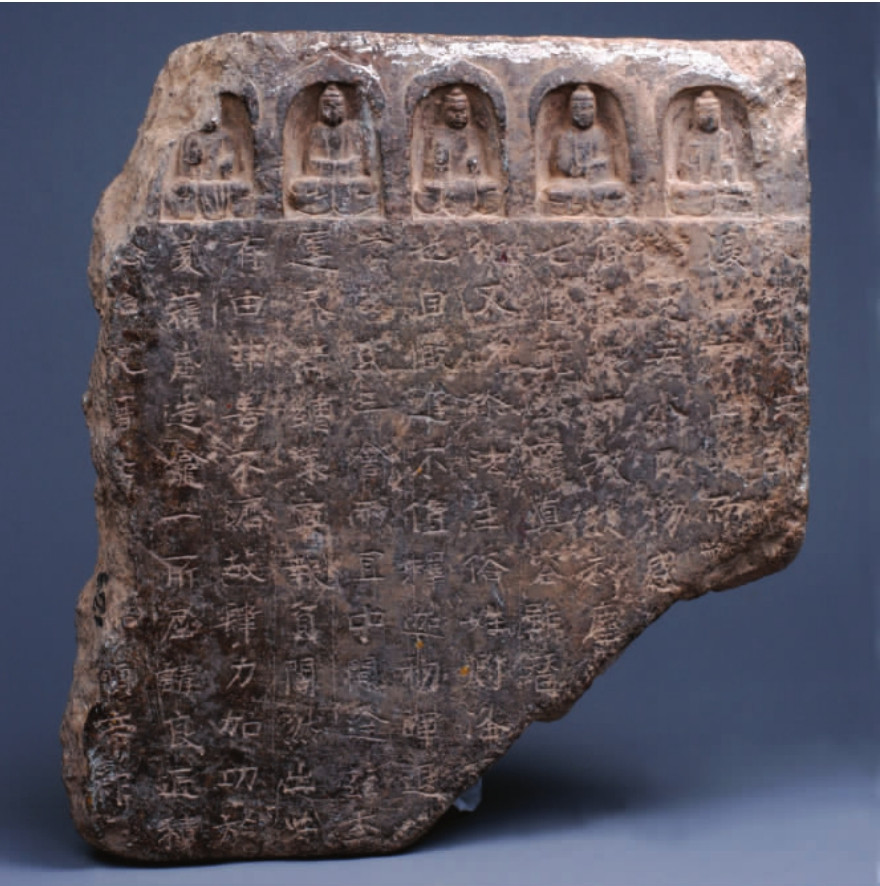
He’s actually 沙彌法生 “Sramanera Fasheng” here, which is striking since a sramanera is a novice – the title sramana 沙門 would be equivalent to Bhiksu. If this is our Fasheng, he’s taken a demotion. But he says of himself, 沙彌法生俗姓劉,洛陽人也 “Sramanera Fasheng’s birth surname was Liu, and he is a person of Luoyang.” The stele is Northern Wei in date, and Luoyang is the capital – about 675 km away from Maijishan’s location in southern Gansu. The specific year is missing from this inscription, but it seems likely that this is Fasheng, and that his presence here is the result of his having been enmeshed in the Prince of Beihai’s faction, and thus having shared his downfall (to significantly less lethal effect, however).
If so, Fasheng’s birth surname was Liu, and this gives us a clue to his connection to the prince. The prince’s wife, as we learn from the beating incident, was also named Liu, and I wonder if Fasheng was her brother or other relative. Certainly monks and nuns of the period, though they “left the family” 出家 to become ordained, maintained active relationships with their family members which the use of dharma-names 法號 like Fasheng tend to otherwise conceal.
 Medieval Buddhist of the Day
Leave a comment